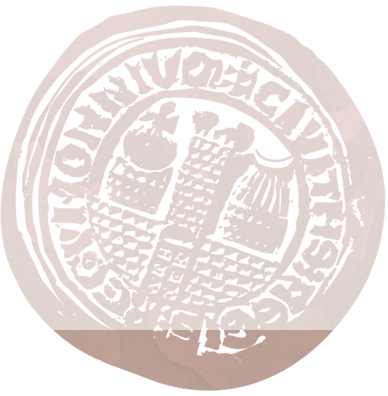
Late 1246 / early 1247. Ignatius, made by the Holy Spirit pastor over the Jacobitae of Syria and all the Orient, writes to Pope Innocent [IV], father of fathers, holder of the See of Saint Peter, prince of the apostles, glorified by Christ God, Who gave Saint Peter the keys to the Kingdom of Heaven and placed him as the foundation of the Church, the servant of the servants of Christ, relating that he received the pope’s letter from the hand of the wise and virtuous Friar Andreas, expressing his joy at the demand for common peace and charity. As he is obedient to perfect peace, he shall first show the truth of the faith that they confess, as God is his witness: ‘Thus we say that we Oriental Christians called Jacobitae believe in the Father and the Son and the Holy Spirit, one nature, three hypostases, three persons. And since the Father is the principle of the Son and of the Holy Spirit, the generative principle of the Son and the spirative principle of the Holy Spirit. And just as we must [not] confess one hypostasis and one person [simply] because there is one nature of divinity, nor again because there are three hypostases and three perfect persons must we confess that there are three natures, but one nature, one power, one will, one natural act of the Father and of the Son and of the Holy Spirit. And further we confess that God the Word the only begotten of the Father descended from the will of the Father and of the Holy Spirit, and dwelled in the womb of the Virgin Mary, and was born of her by a second birth, since He is born of the Father by an eternal birth. And He was made of her perfect man, animated by a rational intellective soul, similar to us in all things except for sin. And He is perfect God and perfect man, without mixture, without confusion. And He is one God, one Christ, one person, as Athanasius (Anathasius) says, and Cyrillus (Cirillus), that in God the Word the one nature is incarnate. And because of this we confess that Mary is the mother of God in truth, because she gave birth to God incarnate, Who was born for our salvation, and grew in human dimensions, and completed the governance, and suffered, and died according to the flesh, and arose on the third day, and since he fulfilled the divine, He was in truth perfect God and perfect man. And further, when He did human things, He was perfect God and perfect man, one after the union. Thus we have not accepted those who confess a divided duality of unity, nor again those who confess a mixture and confusion, as Eutyches (Eutices) the excommunicate. But we have accepted all those who follow the faith of Saint Peter, the prince of the apostles, and who walk on the path of the Council of Nicaea, no matter who they are of the Holy Church’s doctors, whose truth is known to God on high. Again, we damn and excommunicate everyone who deviates from the faith of Saint Peter and of the Council of Nicaea and who corrupts the righteousness of the Christian faith from the time of Symon Magus until this day, whoever they may be, and they are known to God. This, therefore, is our faith and our confession, and with us the Egyptians (Egyptii), and Armenians (Armeni), and Libyans (Libii), and Ethiopians (Ethiopes). Furthermore we confess that the Holy Roman Church is the mother and head of all churches, and it is in her that the bodies of Saints Peter and Paul were reposed.’ This he has shown the pope briefly and succinctly, to avoid tedium in prolixity and because much is understood in little. When the pope seeks unity and concord, which no one can refuse, [Ignatius] asks the pope the following. First, that when their patriarch dies the archbishops shall gather and choose a successor according to custom and with the Holy Spirit. Second, that the Latin patriarch, archbishops, and bishops in their parts shall not judge over their patriarchs and archbishops, but the pope shall judge over them as over the Latin patriarchs and archbishops, and they shall receive the pope’s sentences and judgments as the Latins do. Third, that the Latin patriarch, archbishops, and bishops shall not receive a census from the churches and monasteries that the [Jacobitae] have in [the Latins’] lands, but rather they shall communicate to them the liberties of the Church, as to sons in honour, and the [Jacobitae] shall always show them reverence and honour. Otherwise, it will not be decent for them to desire against the liberty of the Church what the [Jacobitae] have after much labour. Fourth, that those of the [Jacobitae] people who marry Latins shall not be compelled to a second confirmation, since they have been marked with the baptismal character and confirmed one time. Further, when Latins have come to their parts, the people loved them and did what they could to provide for their needs, as in the liberation of slaves or captives and the like. Thus they now ask the pope to repay them in charity, which above all likens us to God, and to pray for them, as is fitting in their misery. (ASV, Reg. Vat. 21, ff. 431v-432r, no. 120; summary Innocent IV, Les registres, 1:455, no. 3036; Baronius, Raynaldus et al., §§36-38, corrected from the manuscript; Claverie, ‘Quatre nouvelles lettres’, pp. 66-68). [Note: This document and the three that follow